
Best RV Surge Protector & EMS Buying Guide: How to Protect Your Rig's Electrical System
Learn how to choose the best RV surge protector EMS system to safeguard your rig from voltage spikes, brownouts, open neutrals, and bad campground wiring.
Disclosure: This page may contain affiliate links. We may earn a commission from qualifying purchases at no extra cost to you.
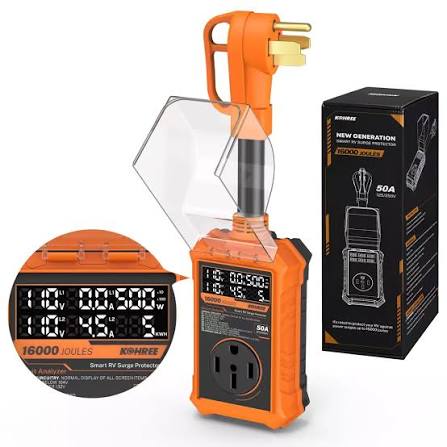
Understanding RV Electrical Protection
Plugging your recreational vehicle into a campground pedestal should ideally feel as safe and routine as powering appliances in a traditional home. However, any seasoned RVer will tell you that RV park electrical grids are notoriously unpredictable. From aging power posts and improperly wired outlets to overloaded summer grids running hundreds of air conditioners simultaneously, your rig is constantly exposed to severe electrical hazards. A single bad power pedestal can instantly destroy thousands of dollars in onboard electronics, including air conditioners, residential refrigerators, microwave ovens, televisions, and expensive inverter systems.
To prevent catastrophic electrical damage, investing in proper power protection is one of the most vital decisions an RV owner can make. But when shopping for equipment, you will quickly realize there is a massive difference between a standard surge strip and a true electrical management system for RV setups (commonly referred to as an EMS). While basic surge protectors only guard against sudden high-voltage spikes, an EMS actively monitors high and low voltage, continuous load conditions, open neutrals, reverse polarity, and line frequencies—shutting off power automatically before damage can occur.
Top products at a glance
Five distinct options with Amazon offer pricing when the Creators API is connected.
 Best Rv Surge Protector Ems System Best OverallCheck Amazon priceCheck Amazon ↗Best Budget
 Best Rv Surge Protector Ems System Budget OptionCheck Amazon priceCheck Amazon ↗Premium Pick
 Best Rv Surge Protector Ems System Premium OptionCheck Amazon priceCheck Amazon ↗Best Value
 Best Rv Surge Protector Ems System Best ValueCheck Amazon priceCheck Amazon ↗Top Choice
 Best Rv Surge Protector Ems System Top RatedCheck Amazon priceCheck Amazon ↗
| Pick | Product | Price | Availability | |
|---|---|---|---|---|
| Best Overall | Best Rv Surge Protector Ems System Best Overall | Check Amazon price | See Amazon | View deal |
| Best Budget | Best Rv Surge Protector Ems System Budget Option | Check Amazon price | See Amazon | View deal |
| Premium Pick | Best Rv Surge Protector Ems System Premium Option | Check Amazon price | See Amazon | View deal |
| Best Value | Best Rv Surge Protector Ems System Best Value | Check Amazon price | See Amazon | View deal |
| Top Choice | Best Rv Surge Protector Ems System Top Rated | Check Amazon price | See Amazon | View deal |
This comprehensive buying guide will help you understand how RV electrical safety devices work, what critical features to evaluate, how to choose between 30-amp and 50-amp models, and whether a portable or hardwired unit fits your travel style best.
Basic Surge Protectors vs. Electrical Management Systems (EMS)
Before purchasing, it is critical to distinguish between a simple surge protection device and a full-featured EMS. Many first-time RVers purchase low-cost power guards thinking they are fully protected, only to discover later that their appliances were ruined by low voltage—a threat basic surge protectors completely ignore.
| Feature | Basic RV Surge Protector | Full Electrical Management System (EMS) |
|---|---|---|
| Surge Suppression | Yes (Basic Joule protection) | Yes (High Joule capacity + MOV protection) |
| Voltage Monitoring | No | Yes (Continuous high and low voltage protection) |
| Open Neutral Detection | Indicates via LEDs only | Detects & disconnects power automatically |
| Reverse Polarity Protection | Indicates via LEDs only | Detects & disconnects power automatically |
| Time Delay for AC Compressor | Rarely included | Yes (Typically 136-second built-in delay) |
| Automatic Power Disconnect | No (Only blows fuse/MOV on spike) | Yes (Shuts off power during faults; restores when safe) |
| Real-Time Data Display | Basic LED indicator lights | Digital LCD, Remote Display, or Mobile App |
A basic surge protector relies on Metal Oxide Varistors (MOVs) to absorb voltage spikes caused by lightning or sudden grid transfers. Once those MOVs take a hit, the unit usually needs replacement. More importantly, standard surge protectors do nothing if the campground pedestal drops to 102 volts during a hot afternoon. Low voltage (brownouts) forces electric motors, such as those in your air conditioner, to draw excessive current, causing them to overheat and burn out.
An electrical management system for RV use acts as a vigilant gatekeeper. It constantly samples the incoming power. If the voltage drops too low (typically under 104V) or spikes too high (typically over 132V), the EMS instantly cuts power to your rig, safeguarding your equipment. Once power stabilizes within safe parameters for a continuous minimum duration, the EMS automatically restores electricity.
What to Look for in the Best RV Surge Protector EMS System
Selecting the right protective device requires evaluating several technical parameters, physical build traits, and usability features. Here are the core specifications you should examine when shopping.
1. Amperage Capability: 30 Amp vs. 50 Amp
Your RV's shore power plug determines the electrical protection unit you must buy. You cannot interchange 30-amp and 50-amp surge devices directly without understanding their fundamental architecture:
- 30-Amp Systems (120 Volts): A 30-amp RV service uses three prongs (Line, Neutral, Ground) and delivers up to 3,600 watts of total power. A 30-amp EMS monitors a single 120V line.
- 50-Amp Systems (120/240 Volts): A 50-amp RV service uses four prongs (Line 1, Line 2, Neutral, Ground). It is a split-phase system providing two separate 120V power legs of 50 amps each, yielding up to 12,000 watts of power. A 50 amp RV surge guard protector must independently monitor both Line 1 and Line 2 simultaneously.
Note: If you own a 50-amp RV but frequently plug into a 30-amp pedestal using a dogbone adapter, you should still purchase a 50-amp EMS. The unit will monitor the single line feed split across your rig's dual inputs.
2. Joule Rating and Surge Absorption Capacity
Surge protection capacity is measured in Joules—the total amount of energy the unit can absorb before failing. Higher numbers indicate superior durability and defense against catastrophic events like nearby lightning strikes.
- Basic protection: 1,000 to 2,100 Joules
- Advanced EMS protection: 3,000 to 4,500+ Joules
Look for systems offering high Joule ratings alongside field-replaceable surge modules. High-end units allow you to swap out damaged surge components without buying an entirely new unit if a massive spike occurs.
3. Comprehensive Diagnostics and Fault Protection
The best rv surge protector ems system will protect against a complete list of common pedestal wiring errors and power anomalies:
- High/Low Voltage: Disconnects power when voltage drops below ~104V or exceeds ~132V.
- Open Neutral: An open neutral in a 50-amp circuit can instantly send 240 volts through 120V appliances, destroying electronics instantly. An EMS shuts off power immediately.
- Open Ground: Prevents hot-skin conditions where the metal chassis of your RV becomes energized, posing an electrocution risk.
- Reverse Polarity: Detects if hot and neutral wires are swapped at the outlet pedestal.
- Accidental 240V Input on 30A Service: Protects 30-amp rigs from improperly wired pedestals feeding 240V.
- Frequency Protection: Monitors incoming Hertz (cycles per second) to protect sensitive digital controls.
4. Auto-Reset Time Delay
Air conditioner compressors require a pressure balance delay before restarting. If power flickers off and immediately back on, an AC compressor attempting to start against high head pressure can trip breakers or burn out the motor. A quality EMS includes a built-in time delay (typically 2 to 2.5 minutes) before reconnecting power after an interruption, allowing compressor pressure to bleed off safely.
Form Factor: Portable vs. Hardwired EMS Systems
One of the biggest decisions you will make is choosing between a portable (pedestal-mounted) unit and a hardwired (permanently installed) system.
Portable EMS Units
Portable surge guardians plug directly into the campground post, and your RV shore power cord plugs into the device.
- Pros: No installation required; easy to move from one rig to another; simple plug-and-play convenience; enables power testing at the pedestal before backing into a site.
- Cons: Exposed to weather, snow, and rain; vulnerable to theft unless locked; easy to forget at the campground post when checking out.
Hardwired EMS Units
Hardwired units are permanently spliced into your RV's main electrical line inside an storage bay or under a dinette seat, usually between the shore power hatch/reel and the main breaker panel (or transfer switch).
- Pros: Completely theft-proof; protected from extreme weather; automatically active every time you plug in; cleaner look with no extra gear dangling from the pedestal.
- Cons: Requires DIY wiring knowledge or professional installation; harder to access if a module needs replacing; cannot test a pedestal post before parking your RV.
Crucial Buying Factors to Consider
When comparing different electrical management systems, keep these secondary but vital considerations in mind:
Display Interfaces & Connectivity
Older EMS models rely solely on blinking LED code lights or small built-in LCD screens. Modern units often offer remote digital displays that mount inside your RV cab or integrate Bluetooth and Wi-Fi mobile apps. App-based monitoring lets you view live voltage, amperage draw, error logs, and power consumption history directly from your smartphone, which is incredibly useful for managing power usage on limited 30-amp hookups.
Weatherproofing & Build Quality
If you choose a portable unit, robust weather resistance is non-negotiable. Look for units rated for outdoor wet locations with thermal-resistant housings, heavy-duty molded plugs, rain-shedding plastic covers, and sturdy locking brackets to secure the unit to the pedestal with a cable lock.
Warranty & Customer Support
Electrical safety devices are designed to sacrifice themselves to protect your rig. Check the manufacturer's warranty policies carefully. Premium brands offer limited lifetime warranties, structural defect coverage, and discounted replacement programs for units destroyed by extreme direct lightning strikes.
Who Each Type Is Best For
Choose a Portable 30A or 50A EMS If:
- You lease, rent, or frequently trade in your RVs.
- You want zero installation hassle and prefer plug-and-play convenience.
- You want the ability to check pedestal power health before positioning your trailer or motorhome in a campsite.
Choose a Hardwired 30A or 50A EMS If:
- You are a full-time RVer who wants permanent, hassle-free protection without setting up gear every stop.
- You frequently camp in urban or high-traffic parks where equipment theft is a concern.
- You camp during severe winter weather conditions where external devices may freeze or suffer water intrusion.
Common RV Electrical Protection Buying Mistakes
Use the shopping picks above to compare options on Amazon.